

The Overlooked Foundation of Yoga
When people think about yoga, they often imagine graceful poses, flexibility, and physical strength. Yet, the true foundation of yoga lies not only in posture but in breath. Within structured yoga classes, pranayama, or the art of breath control, is introduced as a vital element that transforms the practice. While postures stretch and strengthen the body, breathwork calms the nervous system, improves focus, and nurtures emotional balance. Modern science increasingly validates what ancient practitioners understood: breath can influence mind, body, and spirit more profoundly than physical movements alone.
Understanding Pranayama in Simple Terms
Pranayama comes from two Sanskrit words: prana (life force) and ayama (control or expansion). It is the conscious regulation of breath to enhance energy flow and balance within the body. Unlike unconscious breathing that happens every moment, pranayama requires awareness of inhalation, exhalation, and retention. In yoga, breath is considered the bridge between physical movements and mental clarity.
Why Breath Matters More Than Movement
Postures in yoga prepare the body to sit comfortably and meditate, but breathwork sustains inner calm and focus. The difference can be compared to exercising without resting properly: movement alone brings benefits, but controlled breath multiplies the effects.
Key reasons why breath is more impactful:
-
Direct influence on the nervous system: Breath slows heart rate and reduces stress hormones.
-
Improved oxygen exchange: Deep diaphragmatic breathing increases lung capacity and energy efficiency.
-
Mental focus: Breath awareness keeps the mind present, preventing wandering thoughts.
-
Emotional regulation: Different techniques can calm anxiety or energise when fatigue strikes.
The Science Behind Breath and the Body
Scientific research shows that breath is not just about oxygen intake. How we breathe affects the entire body.
Activation of the Parasympathetic Nervous System
Slow, deep breathing activates the parasympathetic branch, often called the “rest and digest” system. This reduces blood pressure, lowers heart rate, and promotes relaxation.
Hormonal Regulation
Controlled breathing reduces cortisol, the stress hormone, while increasing serotonin, which improves mood stability.
Brain Function Enhancement
Functional MRI studies reveal that breath control strengthens activity in brain regions related to focus, decision-making, and memory.
Cellular Health
Efficient breathing ensures optimal oxygen delivery to tissues, enhancing metabolism and slowing down signs of fatigue.
Types of Pranayama Taught in Yoga Classes
Different pranayama techniques serve different purposes, each with unique mental and physical benefits.
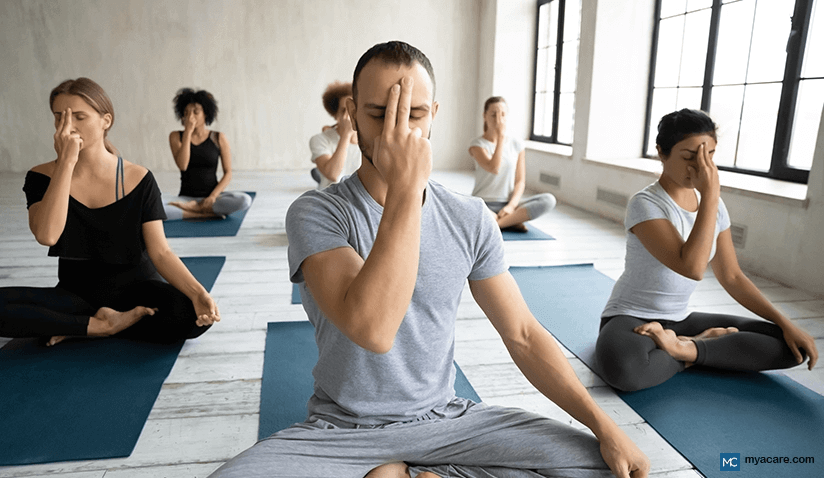
Nadi Shodhana (Alternate Nostril Breathing)
-
Balances both hemispheres of the brain.
-
Promotes clarity, calmness, and improved concentration.
Kapalabhati (Skull-Shining Breath)
-
Involves forceful exhalations and passive inhalations.
-
Energises the body and clears mental fog.
Bhramari (Bee Breath)
-
Produces a humming sound during exhalation.
-
Calms anxiety and helps manage anger.
Ujjayi (Ocean Breath)
-
Involves slight constriction of the throat during breathing.
-
Builds focus during challenging postures and relieves stress.
Sheetali (Cooling Breath)
-
Involves inhaling through a rolled tongue.
-
Reduces heat in the body, beneficial in Singapore’s tropical climate.
Breath and Emotional Wellbeing
One of the most significant contributions of pranayama is emotional regulation. Life in Singapore often comes with long hours at work, academic pressure, or daily commuting stress. Breathing practices help:
-
Release tension stored in the body.
-
Encourage calm responses instead of reactive behaviour.
-
Build resilience to cope with unexpected challenges.
Real-Life Scenarios Where Breath Becomes a Tool
-
Before presentations or exams: Practising slow breathing can reduce nervousness and sharpen focus.
-
After a stressful commute: Alternate nostril breathing helps reset emotional balance before reaching home.
-
During sleepless nights: Gentle diaphragmatic breathing promotes better sleep cycles.
-
In high-pressure negotiations: Ujjayi breath steadies emotions and supports clear decision-making.
How Breath Enhances Physical Postures
Breath and posture are inseparable in yoga. Without mindful breathing, a posture becomes mechanical exercise. With breath, it becomes mindful movement.
-
In forward bends, exhaling deeply allows muscles to relax and stretch further.
-
In backbends, inhaling fully opens the chest and creates space in the spine.
-
In balancing poses, steady breathing stabilises focus, preventing distractions.
By linking breath to movement, practitioners experience flow, often described as being “in the zone”.
Breath as a Meditation Gateway
Many people struggle with meditation because of racing thoughts. Pranayama serves as a natural preparation for stillness. By focusing on inhalation and exhalation, the mind gradually shifts from distraction to concentration. Over time, this leads to deeper states of awareness, making meditation accessible to beginners and advanced practitioners alike.
Building Consistency in Breath Practice
Like any skill, mastering pranayama requires consistency. Casual attempts bring short-term relief, but regular practice creates lasting impact.
Tips for beginners in Singapore:
-
Start with 5 minutes daily of slow, mindful breathing.
-
Practise in the morning to set a calm tone for the day.
-
Use breath techniques during stressful work breaks instead of relying only on caffeine.
-
Integrate pranayama with asanas for holistic benefits.
Common Misconceptions About Breathwork
-
“I already breathe all the time, why practise it?”
Breathing consciously is different from automatic breathing. Awareness creates control over the mind and emotions. -
“Pranayama is too advanced for me.”
Beginners can start with simple techniques like deep belly breathing. Advanced techniques are gradually introduced. -
“It is only for spiritual people.”
While rooted in tradition, pranayama is widely used in modern science and medicine for stress relief and wellbeing.
Why Breath is the Secret to Long-Term Progress
Postures shape the body, but breath shapes the mind. Many practitioners in Singapore notice that while flexibility improves with consistent practice, it is breath mastery that brings lasting clarity, resilience, and inner peace. Breath becomes a tool for everyday living, not just for time spent in the studio.
Studios That Prioritise Breath Practices
Instructors play a critical role in highlighting the importance of pranayama. While some classes may emphasise physical postures, dedicated studios integrate breathwork into every session. For example, Yoga Edition has become a trusted space for residents looking to experience both movement and mindful breathing in a structured, supportive environment.
FAQs
Q. How long should one practise pranayama daily to notice benefits?
A. Even 10–15 minutes of focused breathing daily can improve mental clarity. Significant changes in emotional balance are often observed within 4–6 weeks of consistent practice.
Q. Is it safe for everyone to practise pranayama?
A. Most basic techniques are safe for all, but individuals with respiratory or heart conditions should consult instructors for modifications. Advanced methods may require supervision.
Q. Can pranayama replace meditation?
A. Pranayama is not a replacement but rather a preparation for meditation. It calms the mind and makes it easier to enter a meditative state.
Q. How does pranayama help with workplace stress in Singapore?
A. Breathing exercises can be performed discreetly at desks or during short breaks, quickly reducing anxiety and restoring focus.
Q. What is the best pranayama technique for beginners?
A. Deep diaphragmatic breathing or alternate nostril breathing are ideal starting points. They are simple, effective, and safe for daily practice.