

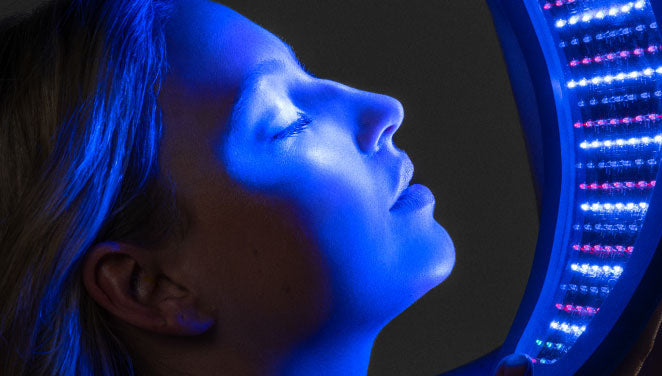
Modern daily routines revolve around glowing glass rectangles. From smartphones checked before getting out of bed to laptop screens utilized throughout the workday, exposure to digital displays has reached an unprecedented high. While public health conversations have historically focused on digital eye strain and disrupted circadian rhythms, dermatologists and cosmetic chemists are directing urgent attention toward the skin. This specific radiation spectrum, known scientifically as High-Energy Visible light, reaches deep layers of the cutaneous architecture and triggers biochemical cascades that alter cellular function. Understanding the precise physiological impacts of this exposure provides the necessary foundation for constructing an effective, contemporary protective regimen.
Understanding High-Energy Visible Light and Its Spectrum
Light exists as an electromagnetic spectrum consisting of various wavelengths, with visible light falling approximately between four hundred and seven hundred nanometers. High-Energy Visible light, commonly referred to as blue light, occupies the shortest, most energetic portion of the visible band, roughly between four hundred and five hundred nanometers. Unlike invisible ultraviolet radiation, which is split into UVA and UVB rays, blue light can be seen directly by the human eye. The primary natural emitter of this radiation is the sun, which exposes human beings to immense levels of broad-spectrum light outdoors. However, the artificial sources present in everyday life, including smartphones, tablet displays, computer monitors, and modern light-emitting diode indoor lighting, introduce sustained, low-dose exposure at close physical proximity.
Although the intensity emitted by an office computer monitor is fractional compared to solar output, modern behavioral patterns change the risk equation dramatically. Most adults spend eight to twelve hours in direct alignment with artificial screens, often holding handheld devices less than a foot away from their faces. Dermatological research shows that this persistent, uninterrupted proximity creates cumulative damage over long durations. The skin does not get an opportunity to recover or clear the resulting chemical stress before the next round of exposure begins.
Cellular Penetration and Free Radical Generation
The fundamental danger of visible blue wavelengths stems from their depth of penetration. Ultraviolet B rays primarily interact with the topmost surface layer known as the epidermis, producing standard sunburns and direct deoxyribonucleic acid damage. Ultraviolet A rays travel deeper into the dermis, contributing to long-term structural degradation. High-Energy Visible light possesses a longer wavelength than both forms of ultraviolet radiation, permitting it to bypass upper epidermal defenses and penetrate directly into the deep dermal matrix where living fibroblasts, blood vessels, and fundamental support proteins reside.
Once situated inside these deeper tissues, blue light stimulates photosensitizers within cellular structures, notably flavins and porphyrins. This biochemical interaction triggers the rapid formation of reactive oxygen species, commonly referred to as free radicals. These unstable molecules seek structural stability by aggressively scavenging electrons from healthy nearby cellular components. They initiate lipid peroxidation across cellular membranes, damage internal mitochondria, and disrupt nuclear material. This resulting oxidative stress destabilizes cellular homeostasis and accelerates intrinsic tissue decay.
Structural Degradation and Accelerated Premature Aging
The surge of reactive oxygen species induced by prolonged screen exposure inflicts severe collateral damage on the structural architecture of the skin. Fibroblast cells within the dermis are responsible for manufacturing structural collagen bundles and flexible elastin fibers, which provide firmness, elasticity, and youthful resilience. High oxidative stress causes these fibroblasts to downregulate their synthetic output while simultaneously upregulating destructive enzymatic activity.
Specifically, blue light exposure prompts an aggressive spike in matrix metalloproteinases, a group of enzymes that break down existing structural proteins. Collagen fibers become fragmented, unraveled, and weak, losing their ability to hold the overlying skin taut. Concurrently, elastin networks deteriorate into disordered fragments. This process mirrors the clinical hallmarks of photoaging typically associated with long-term sun exposure. Over time, individuals experience premature loss of facial firmness, accelerated skin laxity, deeper expression lines, and a noticeable leathery or crepey texture across areas that face digital devices daily.
Hyperpigmentation and Uneven Skin Tone
Beyond structural weakening, High-Energy Visible light has a uniquely pronounced effect on melanogenesis, the physiological process responsible for pigment creation. Research indicates that visible blue wavelengths activate a specific light-sensing receptor found on human melanocytes known as Opsin-3. When activated by these shorter visible wavelengths, Opsin-3 initiates a signaling cascade that stimulates tyrosinase, the rate-limiting enzyme required for melanin production.
Unlike the short-lived, transient pigment darkening caused by low doses of ultraviolet light, the pigmentation prompted by High-Energy Visible radiation is exceptionally persistent, deep, and long-lasting. This impact is disproportionately severe in individuals with Fitzpatrick skin types three through six, which naturally carry higher baseline melanin concentrations. Screen exposure and ambient indoor light can exacerbate stubborn cosmetic concerns such as melasma, post-inflammatory hyperpigmentation, and patchy discoloration. For individuals battling recurring facial dark spots, unshielded digital screens can counteract months of rigorous corrective skin treatments.
Disruption of the Skin Barrier and Internal Repair Mechanisms
The detrimental impact of blue light extends directly to the physical barrier function of the stratum corneum, the outermost protective shield of the body. Sustained oxidative stress degrades intercellular lipids, including ceramides, free fatty acids, and cholesterol, which normally bind dead surface cells together like mortar between bricks. When this lipid matrix degrades, the skin suffers from heightened transepidermal water loss. The tissue loses its natural moisture reserves, leaving the surface dry, dull, irritated, and sensitive to environmental irritants.
Furthermore, visible light exposure at unusual hours disrupts natural circadian rhythm regulation within cutaneous cells. Human skin cells follow an internal clock system that governs daytime defense and nighttime cellular renewal. Daytime processes focus on antioxidant defense against environmental challenges, while nocturnal hours are dedicated to cellular repair, microcirculation, and protein synthesis. Constant exposure to blue light late into the evening sends false environmental cues, tricking dermal cells into remaining in daytime defense mode. Consequently, critical cellular repair pathways stall, microcirculation slows down, and the skin wakes up fatigued, inflamed, and poorly restored.
The Inadequacy of Standard Chemical Sunscreens
A common misconception among consumers is that their everyday broad-spectrum sunscreen provides complete protection against device-induced damage. Traditional chemical sunscreens operate through organic ultraviolet filters such as avobenzone, octisalate, and homosalate. These active molecules are chemically calibrated to absorb radiation strictly within the ultraviolet spectrum between two hundred ninety and four hundred nanometers. They are essentially transparent to visible light and offer zero physical or chemical defense against wavelengths above four hundred nanometers.
Because High-Energy Visible light begins right at the boundary where ultraviolet light ends, typical chemical ultraviolet filters permit these visible wavelengths to enter the dermal tissue completely unimpeded. Relying solely on an un-tinted chemical sunscreen while sitting directly in front of monitors creates an artificial sense of protection. Specialized physical barriers and topical neutralizing compounds are mandatory to bridge this defensive gap.
Physical Mineral Blockers and the Role of Iron Oxides
Combating visible light requires ingredients that can physically intercept and scatter electromagnetic waves across the visible band. Physical or mineral sunscreens utilize inorganic compounds like zinc oxide and titanium dioxide. While these mineral filters do provide modest scattering benefits against visible light, standard clear formulations still allow a significant percentage of High-Energy Visible rays to penetrate the dermal surface.
The premier topical ingredient for blocking visible blue wavelengths is iron oxide. These pigments, available in red, yellow, and black variations, are the primary ingredients used to tint foundations, tinted moisturizers, and tinted mineral sunscreens. When suspended evenly across an emulsion, iron oxides absorb and deflect visible wavelengths between four hundred and five hundred nanometers with remarkable efficiency. Dermatological trials confirm that formulas combining mineral zinc oxide with iron oxide pigments reduce blue-light-induced hyperpigmentation far more effectively than bare mineral or chemical lotions. Applying a high-quality tinted physical sunscreen every morning provides an immediate physical shield against both natural outdoor exposure and indoor digital emissions.
Building an Antioxidant Shield
Because physical barriers cannot eliminate every stray ray of light, establishing a secondary biological defense within the skin layers is essential. This objective requires the daily topical application of high-potency antioxidants designed to quench reactive oxygen species instantly before they trigger destructive cellular cascades. Formulating a multi-layered antioxidant regimen neutralizes free radicals directly at the point of origin.
Vitamin C, specifically in the stable form of L-ascorbic acid or lipid-soluble ascorbyl tetraisopalmitate, serves as an exceptional defensive baseline by scavenging oxygen free radicals and supporting natural collagen synthesis. Pairing Vitamin C with Vitamin E and ferulic acid exponentially increases its molecular stability and defensive capacity. Niacinamide, or Vitamin B3, provides additional protection by preserving cellular energy levels, preventing oxidative protein damage, and strengthening the fragile intercellular lipid barrier against moisture evaporation. Other botanicals rich in polyphenols, such as epigallocatechin gallate from green tea, resveratrol, and lutein, demonstrate remarkable efficacy in neutralizing the exact oxidative pathways stimulated by visible blue wavelengths. Applying an antioxidant serum beneath daily moisturizer equips living cells with the chemical tools needed to self-terminate destructive oxidative chains.
Comprehensive Lifestyle Modifications and Digital Hygiene
Effective defense requires managing the emission source alongside topical skincare solutions. Adjusting settings across personal electronic devices offers a straightforward way to diminish the physical volume of radiation emitted toward the face. Most modern operating systems include built-in features that shift screen color temperatures toward the warm end of the spectrum during evening hours. Activating warm display modes permanently reduces the output of wavelengths between four hundred and four hundred eighty nanometers throughout the day.
Physical screen filters made from specialized optical glass or treated polymers can be mounted over computer monitors to filter out harmful visible bands without distorting screen clarity. Maintaining an intentional physical buffer between electronic devices and the face also pays dividends. Increasing viewing distance from one foot to two feet drastically drops the energy density reaching cutaneous tissues according to the inverse-square law of radiation physics. Incorporating regular screen breaks away from artificial illumination allows the eyes and the cutaneous barrier a much-needed respite.
Finally, evening habits dictate how well the skin recovers from daytime stress. Turning off unnecessary light-emitting diodes, avoiding smartphone usage right before sleeping, and creating a dark sleep environment restores natural circadian rhythms. When skin cells receive clear biological signals that nighttime has arrived, natural repair processes can operate unimpeded. This restoration allows fibroblasts to generate fresh structural proteins, facilitates comprehensive cellular turnover, and ensures the skin barrier emerges hydrated and resilient every morning.
Frequently Asked Questions
What specific ingredients should you look for on product labels to confirm true blue light protection?
Check ingredient listings for tinted iron oxides, zinc oxide, ectoin, and specialized carotenes like lutein. Ectoin is a natural extremolyte that prevents cellular dehydration and membrane damage under environmental stress, while lutein acts as an internal optical filter. Formulations that explicitly advertise visible light protection should feature iron oxides paired with broad-spectrum mineral filters and concentrated polyphenol antioxidants.
Does wearing regular facial makeup or foundation provide sufficient defense against screen emissions?
Standard foundation can provide modest defense if it contains substantial concentrations of iron oxide pigments used for color matching. However, many liquid foundations are formulated primarily for aesthetic coverage rather than uniform light scattering. They often lack certified broad-spectrum mineral filters and leave microscopic gaps across the skin surface. Using an adequately formulated tinted mineral sunscreen as the base ensures uniform coverage and verified spectral density.
Are the blue light emissions from indoor light-emitting diode light bulbs dangerous to the skin?
Standard residential light-emitting diode bulbs emit noticeable amounts of blue light to produce bright, white illumination. While individual residential bulbs emit low energy compared to direct sunlight, spending extensive hours in brightly lit commercial or home office environments without protection contributes to chronic, low-level oxidative accumulation. Opting for warm-toned bulbs with lower color temperatures around twenty-seven hundred Kelvins minimizes unnecessary visible radiation in living spaces.
Can blue light penetrate regular glass windows in homes and office buildings?
Traditional architectural window glass is manufactured to filter out short-wave Ultraviolet B radiation, and specialized coatings can reduce Ultraviolet A transmission. However, standard window glass remains completely transparent to visible light wavelengths. Sunlight streaming through a window carries significant amounts of natural High-Energy Visible light directly into living spaces, making indoor visible light protection essential even when away from digital screens.
How long does it take for screen-induced hyperpigmentation to fade once proper protection is established?
Visible light hyperpigmentation resides in deep epidermal and dermal regions, meaning it requires considerable time and patience to resolve. With the strict daily use of tinted mineral protection, targeted topical antioxidants, and tyrosinase-inhibiting ingredients such as tranexamic acid or azelaic acid, visible improvements generally begin appearing within eight to twelve weeks, which aligns with two complete cellular turnover cycles.
Does blue light exposure affect the delicate skin around the eye area differently than the cheeks or forehead?
The skin surrounding the orbital socket is significantly thinner and naturally lacks the dense sebaceous gland support found on the rest of the face. This structural thinness allows High-Energy Visible light to penetrate toward fragile vascular networks more easily. Oxidative stress in the peri-orbital region rapidly degrades subtle microcapillary walls and accelerates the breakdown of minimal collagen deposits, contributing to prominent dark circles, puffiness, and fine crow’s feet lines.
Is it necessary to reapply blue light protection throughout the workday if staying completely indoors?
Reapplication remains necessary because the protective film formed by topical products shifts naturally throughout the day. Sebum production, sweat, and subtle facial touching create microscopic fissures within the protective layer of mineral particles and iron oxides. Applying a light layer of tinted mineral powder or an iron-oxide-infused setting mist every four hours ensures uninterrupted physical coverage across the workday.